
Musical Semiotics in Kate Soper’s Ipsa Dixit (2010-2016)
Dissertation (2024, CUNY Graduate Center): Read/Download — ABSTRACT: This dissertation analyzes the six parts of Kate Soper’s Ipsa Dixit (2010–2016). While individual parts have received some music theoretical attention, this is the first analysis of the entire Pulitzer Prize-nominated work. Ambiguity and contingency are major themes of Ipsa Dixit, and by treating each part independently and in combination, I hope to honor Ipsa’s contingent status as a unified work comprised of six complete works. Soper’s libretto unifies an assemblage of texts with adaptations of Aristotle to investigate the intersections of language and music with authority, veracity, and (un)intelligibility.
I theorize that Soper’s “philosophy-opera” dramatizes the formation of a community of inquiry in an abstract narrative that relies on ambiguous dramatis personae, metanarrative transformations, multimedial interactions, and semiotic transvaluation. The solo soprano is accompanied by three instrumentalists who are at once a supporting chamber ensemble and individual characters on stage. Transformations from diegetic to mimetic modalities support the characterization of the soprano, who oscillates between lecture-like detachment and impassioned, self-reflective song acts. Soper’s text setting takes advantage of iconic resemblances and indexical associations between text and music to generate emergent meaning in multiple semiotic registers through their multimedial interaction. I will describe moments of intermedial substitution, critical text setting, and madrigalism, and point to moments when physical, musical, and dramatic gestures become indistinguishable.
I identify Ipsa’s inquiries into expression, communication, and flux by considering motivic and harmonic exchanges across its six parts, historical references and allusions, and both musical and textual influences. I introduce concepts such as the prefixed composer, compound dramatis persona, harmonic allophone, harmonic phoneme, and surreptitious song act. My semiotic analysis, drawing particularly on Peirce, Liszka, and Nattiez, theorizes semiosis as a process that accords with an Aristotelean processual epistemology expressed in Metaphysics. I describe how operatic “song acts,” as defined by Kramer, articulate Ipsa’s contentious relationship with the presumed authority of the soprano, and the presumed authentic expression of song. My analysis of Ipsa Dixit as the dramatization of a community of inquiry integrates aspects of collaborative “intimacy” and “trust” expressed by performers of the work, is supported by the libretto’s questioning spirit, and supports the wide range of expressive modalities in the score and performance.
On one hand, Ipsa Dixit is a unified work, connected thematically in its cooperative inquiries into epistemology, meaning, and communication. It is bound together with interwoven dramatic-musical techniques and by harmonic, motivic, and textural interrelation. On the other hand, each of Ipsa Dixit’s six parts is complete and whole, independently developing dramatis personae, employing distinctive narrative modalities, and composing musical forms. My analysis does not seek to reconcile these two features but embraces the work’s ambiguous (dis)unity as concomitant with Ipsa’s continual explorations of the ways expression and (un)intelligibility are intertwined with the contingency and provisionality of meaning.
Conference Presentations
[more info, abstracts available at https://gc-cuny.academia.edu/ScottMiller]
Tuning and Timbre as Critical Text Setting in Kate Soper’s Cipher
Presentations:
AMS/SMT Joint Annual Meeting, Denver, Colorado (November 12, 2023, 9:00 am on the panel “Timbre, Voices, Ciphers”)
Disidentificatory Compositional Practice in Kate Soper’s Only the Words Themselves Mean What They Say and Cipher
Presentations:
Penn State New Music Festival, State College, PA (Mar. 24–25, 2023)

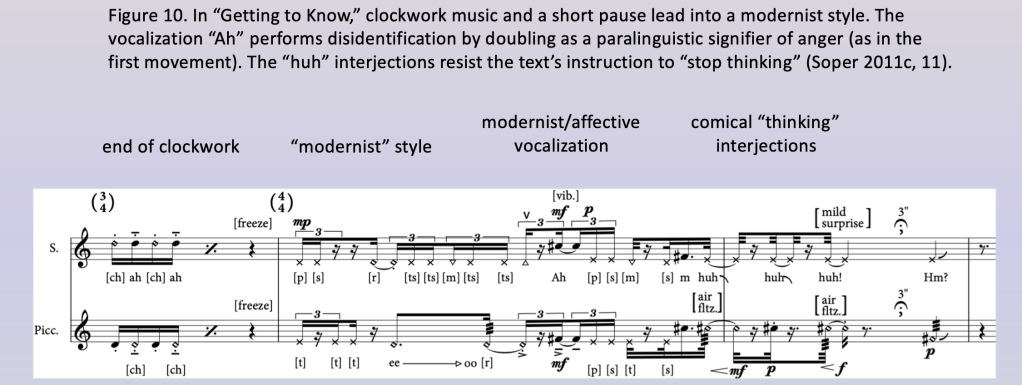
Huh!: Gendered Resistance through Semiotic Disidentification in Kate Soper’s “Only the Words Themselves Mean What They Say”
Presentations:
AMS/SEM/SMT Joint Annual Meeting, New Orleans, LA (Nov. 10–13, 2022)
Music Theory Society of the Mid-Atlantic, Virtual Conference (July 29–30, 2022)
Miller_cv_teaching-20221010
Music Theory Southeast, Florida State University, Tallahassee, FL (March 18–19, 2022)
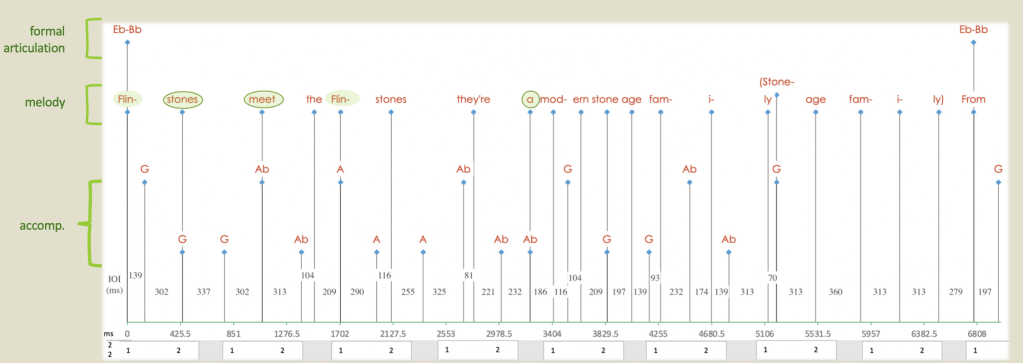
Groove Fluidity: Asynchronous Onsets as Structural Simultaneities in Jacob Collier’s Arrangement of ‘Flintstones’
Presentations
Dutch-Flemish Society for Music Theory, Rhythm, virtual (March 12–13, 2022)
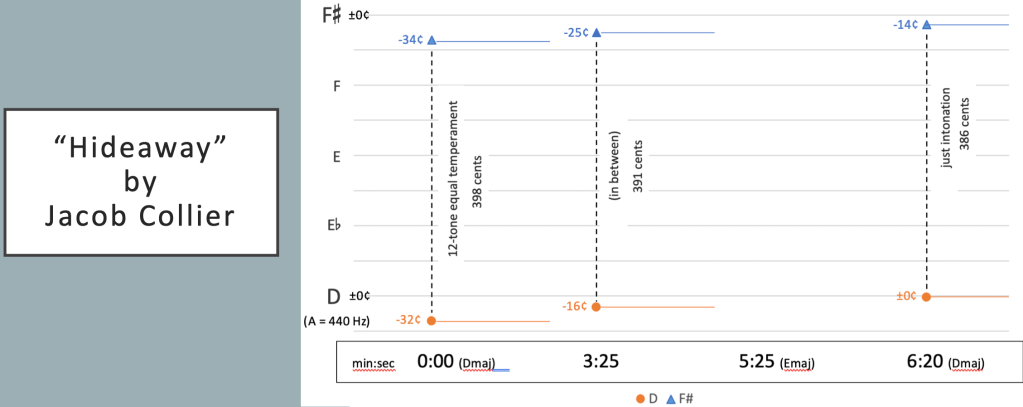
Fluid Notes: Analogical Approaches to Pitch Ontology in the Music of Jacob Collier
Presentation
Midwest Graduate Music Consortium, virtual (April 9–10, 2022)
Manuscripts in Preparation
“Harmonic Tensions in ‘limited approximations’ by Georg Friedrich Haas”
“Referential Discourses in Luciano Berio’s Rendering: Topic, Text, and Commentary”
“Semiotic Shifts as Narrative Transvaluation in katachi by Eric Wubbels”
 Scott Allen Miller, composer